
I only have one real AI-recipe disaster story, but it's a good one.
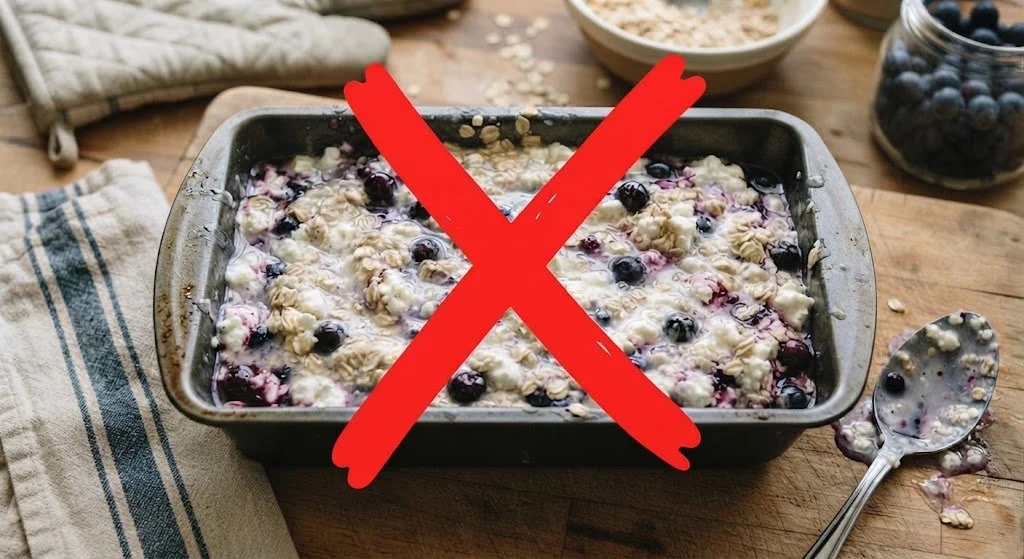
It was a blueberry cottage cheese oat bake — the kind of recipe that's everywhere right now, promising a healthy, protein-packed breakfast bread. I read through it and something felt slightly off, though I couldn't put my finger on exactly what. I'm not primarily a baker — I'm a cook first, a baker second — so I told myself maybe I just didn't know this particular style well enough to trust my instinct. I made it anyway.
It came out of the oven as soup. Not bread. Soup, in a loaf pan.
When I went back and actually looked at what I'd missed, the answer was almost funny: no egg, no baking powder. Nothing in the recipe was ever going to help it rise or set. It wasn't a recipe that had been made and adjusted by someone standing at their own oven, watching it fail to become bread, and fixing it. It was a recipe that sounded like a bake because it had all the right words — oats, cottage cheese, blueberries, cinnamon — arranged in a way that read as familiar. It just wasn't grounded in anything that had actually been tested. That one went straight in the trash, and it became one of the clearest lessons I've had in exactly what "untested" costs you.
But Here's the Other Side of Trial and Error
I want to be honest about something, because it matters: I get inspiration from other people's recipes all the time. I get it from restaurants, from dishes I've tasted once and wanted to recreate, from cuisines I didn't grow up cooking. That's not the problem. That's how cooking has always worked.
The difference is what happens after the inspiration — and that's where forty years in the kitchen actually shows up.
A little while back, I made Maqluba for a friend. If you haven't had it, Maqluba is a beautiful Levantine dish — the name literally means "upside-down." Rice, meat, and fried or roasted vegetables like eggplant, cauliflower, and potatoes are layered in a pot, cooked together, and then the whole thing is flipped onto a platter so it comes out as a golden, layered dome. It's dramatic, it's fragrant with warm spices, and it's meant to be a bit of a showpiece at the table.

I had never made it. I had never even tasted it before that day.
So I did what I always do: I read through many different versions of it — not one recipe, several — looking at how experienced cooks handled the layering, the spice ratios, the rice-to-vegetable balance. Then I cooked it and served it to my friend. Layered in the pan, it looked beautiful!
It tasted good. I want to be clear about that. But the moment I tasted it myself, before she ever took a bite, I already knew: it needed more vegetables, a stronger hand with the spices, and noticeably less rice. She didn't complain — in fact she enjoyed it — but when I told her my own critique afterward, she agreed with every point.
That's the part an AI-generated recipe can't do. It's not that I got the dish perfect on the first try. I didn't. It's that I could taste it critically, in real time, and know exactly what was wrong and why — because forty years of cooking has taught me what balance feels like on the tongue, even in a dish I'd never made before.
Experience Doesn't Mean Perfect. It Means You Can Tell.
I can often look at a recipe now — not always, but often — and have a pretty good sense of how it's going to turn out before I ever turn on the stove. Too much liquid here, not enough acid there, a spice that's going to get lost under everything else. That instinct is exactly what was missing from that oat bake, and exactly what was present, even in an unfamiliar dish, when I made Maqluba for the first time.
That's the whole difference. Not that every dish I make is flawless on attempt one. It's that when something's off, I know it, I can name it, and I fix it before it ever reaches your table.
Every Recipe Here Has Already Been Through That
This is what Kitchen Tested actually means at MK's Table. Not that a recipe sounded plausible. Not that the ingredients were arranged in a way that reads well. It means it went through the same process as that Maqluba — made, tasted honestly, adjusted, sometimes made again — until it was actually right, not just written to sound right.
You won't get a soupy loaf pan from anything on this site. You'll get a recipe that already survived its own trial and error, so your table doesn't have to.
Browse our chef-tested digital cookbooks, explore a monthly menu experience, or reach out about custom menu planning for your next gathering. Every recipe made. Every flavor earned.
Here's to the dishes worth the trial and error — and the honesty to admit when something still needs less rice.
Gathering together isn't just about the meal; it's about connecting with the people we were meant to be. I hope today’s thoughts inspire you to lead with beauty and intention at your own table.
Ready to host with confidence? Explore our latest curated menus and cookbooks to find your next signature meal.
Pull up a chair at MK’s Table, where we make Elegant Meals Simple!
Warmly,
Michele
Chief Culinary Creator & Founder
MK’s Table | Elegant Meals Made Simple
Enjoyed this post? Join Our Monthly Menu Club!
Get seasonal menus, exclusive recipes, and bonus content delivered straight to your inbox every month. Subscribe Now
Some links in this post may be affiliate links. If you purchase through them, I may earn a small commission at no extra cost to you. Shop My Favorite Products - Enter into Seach Bar
All recipes and advice are for informational purposes only. For full details, read our Disclaimer & Terms.