
The Ultimate Guide to Beef: From Tough Cuts to Fork-Tender Perfection
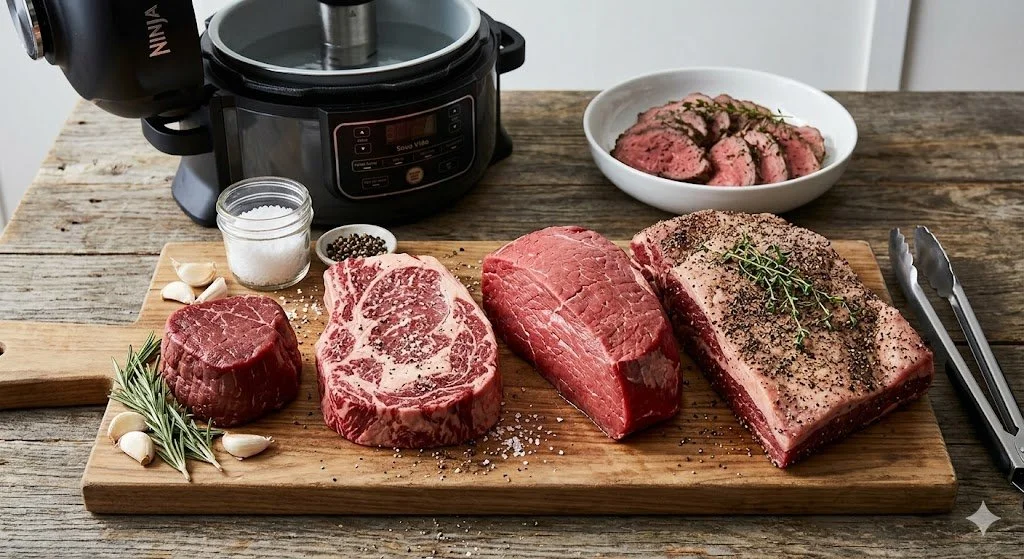
Different cuts of Beef
Beef is the cornerstone of many elegant meals, yet it can be one of the most intimidating proteins to master. The secret to a successful steak or roast doesn’t just lie in the seasoning—it’s about matching the specific cut of meat to the correct cooking method.
Whether you are working with a buttery tenderloin or a stubborn top round, understanding the science of the "sear and the soften" will transform your home cooking.
Understanding the Cuts: Tenderness vs. Flavor
Generally, the rule of thumb is: the less a muscle moves, the more tender it is. Muscles that do the heavy lifting (like the shoulder or hindquarters) are tougher but often pack the most beefy flavor.
1. The Luxury: Beef Tenderloin
The most prized cut on the cow, the tenderloin is incredibly lean and soft. Because it has very little connective tissue, it requires minimal cooking time. This is my favorite cut, not because it’s expensive, but because it’s the least chewy and so many ways to make this a spectacular highlight of the meal.
Best For: Filet Mignon, Chateaubriand.
Cooking Tip: High-heat searing is essential. Aim for medium-rare (54∘C to 57∘C) to maintain its delicate texture.
2. The Project: Brisket
Located in the chest, the brisket is full of collagen and connective tissue. If you grill this like a steak, it will be inedible. However, when cooked low and slow, that collagen melts into gelatin.
Best For: Texas-style BBQ, pot roasts, or braised Sunday dinners.
Cooking Tip: Patience is your best ingredient. It needs moisture and time to break down.
Crockpot: This is my absolute favorite way to cook it. In October, I’ll be featuring this dish in my Monthly Menu Plan.
3. The Value King: Top Round (London Broil)
The top round is lean and budget-friendly, but it has a reputation for being "chewy." It is a large muscle from the leg, meaning it is quite tough if handled incorrectly.
Best For: Roast beef slices, stir-fry, or marinated "London Broil."
Cooking Tip: Thin slicing against the grain is mandatory here to shorten the muscle fibers.
Sous Vide: If you don’t have a Ninja Foodi with Sous Vide option, you are missing out. Matter of fact, I’m making this one this weekend for company. When cooked properly, comes out like a tender filet. Check out My Favorites for the machine I use.
Crockpot: I love the crockpot for this one as well. So tender but comes out like roast.
4. The Flavor Powerhouse: Ribeye
With heavy marbling (intramuscular fat), the ribeye is the gold standard for flavor. The fat renders during cooking, essentially basting the meat from the inside out.
Best For: Pan-seared steaks.
Grilled: This is one we like to grill, however, a nice dry brine to help break down any fiber is essential (at least for me).
Mastering the "Tough" Cuts: Two Expert Methods
How do we take a "cheap" cut like top round and make it rival a tenderloin in texture? It comes down to temperature control.
The Magic of Sous Vide
Sous vide is a game-changer for beef. By vacuum-sealing the meat and immersing it in a precision-controlled water bath, you can hold a "tough" cut at 55∘C (131∘F) for 24 to 48 hours. This extended time allows the connective tissue to dissolve without overcooking the meat. The result? A top round that looks and feels like prime rib.
The Kitchen Multi-Tasker: Ninja Foodi
If you’re looking for efficiency, the Ninja Foodi is an excellent tool for these cuts. You can use the Sear/Saute function to get a deep, caramelized crust on your roast, then immediately switch to the Pressure Cook function to tenderize a brisket in a fraction of the usual time. For those who prefer the precision of the water bath, use the Sous Vide setting to achieve that edge-to-edge pink perfection before a final quick sear.
Pro-Tips for Success
Salt Early: Salt your beef at least 40 minutes before cooking. This allows the salt to penetrate the fibers and helps retain moisture.
The Rest is Best: Never cut into beef immediately after it leaves the heat. Resting for 10–15 minutes allows the juices to redistribute. Even us humans need rest to make us better! 🙂
Psalm 23:2-3 He makes me lie down in green pastures,
He leads me beside quiet waters, He refreshes my soul.
Slice Against the Grain: Look for the direction the muscle fibers are running and cut perpendicular to them. This is the single most important step for making "tough" meat feel tender in your mouth.
At the end of the day, these recipes and plans are just tools. The real blessings happens when the plates are full, the chairs are pulled in close, and the noise of the world fades away.
My prayer for you is that your kitchen becomes a sanctuary—a place where the 'mental load' is lifted so that your heart can be full. I’d love for you to Join the Table with us this month, not just for the recipes, but for the peace of mind that allows you to truly be present.
Here is to the laughter, the lingering conversations, and the blessed moments around your table.
Ready to host with confidence? Explore our latest curated menus and cookbooks to find your next signature meal.
Pull up a chair at MK’s Table, where we make Elegant Meals Simple!
Warmly,
Michele
Chief Culinary Creator & Founder
MK’s Table | Elegant Meals Made Simple
Enjoyed this post? Join Our Monthly Menu Club!
Get seasonal menus, exclusive recipes, and bonus content delivered straight to your inbox every month. Subscribe Now
Some links in this post may be affiliate links. If you purchase through them, I may earn a small commission at no extra cost to you. Shop My Favorite Products - Enter into Seach Bar
All recipes and advice are for informational purposes only. For full details, read our Disclaimer & Terms.